5 Map Tracking Tools That Show Exactly Where Your Customers Are Clicking: Mastering Google Business Profile SEO
If you are a contractor, plumber, or lawyer, you’ve likely experienced this frustration: You sit at your desk, type your service into Google, and see your business sitting comfortably at the #1 spot in the Map Pack. You feel a sense of accomplishment. But then, the phone doesn’t ring. You drive three blocks away to a job site, search again, and suddenly your business is nowhere to be found. This is the reality of google business profile seo in 2026, and it’s why most traditional ranking reports are essentially lying to you.
As a Local SEO Consultant and Google Business Profile Product Expert, I have audited thousands of listings. The most common mistake I see is business owners relying on “vanity rankings” – results seen from a single physical location. In the modern local algorithm, rankings are fluid. They are hyper-local, changing block-by-block and even meter-by-meter. To truly understand your visibility, you need to stop looking at lists and start looking at grids.
Section 1: The “Proximity Trap” and Why Your Rankings are Lying to You
The “Proximity Trap” is a phenomenon where a business owner believes they are dominating their market because they rank well within their own office. However, Google’s algorithm is heavily weighted toward the user’s physical location. This creates what I call the “Proximity Shadow.” You might be the king of your parking lot, but you are invisible to the customer standing at the Starbucks half a mile away.
Research shows that increasing customer retention by just 5% can boost profits by 25-95%. However, you can’t retain customers you never reach. If your profile is trapped in a proximity shadow, you are hemorrhaging leads to competitors who may have worse reviews but better geo-spatial optimization. Google serves different results based on where a user is physically standing because it prioritizes convenience and relevance above all else. This is why you might find that Why Your Business Profile Stays Invisible Even When You Search From Your Own Office is the most critical hurdle to clear in your SEO journey.
In 2026, we are seeing the “Radius Lock” become even tighter. Google’s AI-driven filters are now better at identifying the “serviceable area” of a business, often filtering out businesses that are technically within a city but geographically distant from the searcher’s current GPS coordinates. To combat this, you must move beyond static reporting.
Section 2: What is Geo-Grid Tracking?
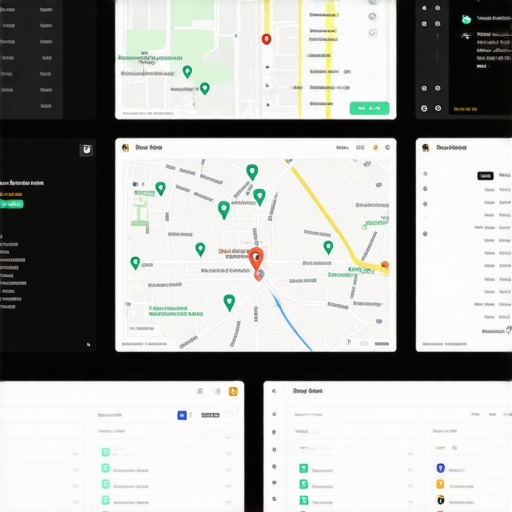
Traditional “list-based” tracking tells you that you are #3 for “plumber near me.” But #3 *where*? Geo-grid tracking, or “geo-grid heatmaps,” provides a multi-point visualization of your rankings across a specific geographic area. It places a grid of “pins” over a map, and for each pin, it runs a localized search to see where you rank at that exact spot.
This is the foundation of modern local map pack seo. Instead of one data point, you get hundreds. You can see exactly where your “rank wall” is – the point where your visibility drops off from a green #1 to a red #20. Visualizing this data is the first step toward a real google maps ranking service strategy. To get started with this level of precision, I recommend using a high-authority google maps rank tracker like SEO Viper Tools, which allows you to see these grids in real-time and identify exactly where your competitors are gaining ground.
Understanding the grid is vital because The Reason Most Local SEO Software Fails to Move Your Map Pin is that they don’t account for the hyper-local variance in search intent and proximity filters. If you don’t know where you are failing, you can’t optimize for it.
Section 3: Tool #1 – Local Falcon (The Visual Pioneer)
Local Falcon was one of the first tools to popularize the geo-grid concept. It remains a favorite for many because of its intuitive interface and historical trend reporting. When you run a scan, it produces a “green to red” dot map. Green dots (1-3) mean you are in the Map Pack; yellow and red dots mean you are buried on page two or further.
Starting at approximately $24.99/mo, it’s an accessible entry point for small business owners. The real value of Local Falcon is its ability to show “Share of Local Voice.” This metric helps you understand not just where you rank, but how often you appear compared to the total possible impressions in that area. By identifying your “lead drain” – those specific neighborhoods where you drop to position #4 or #5 – you can tailor your local seo ranking factors, such as localized content or geo-tagged images, to reclaim that territory.
Section 4: Tool #2 – BrightLocal (The Agency Standard)
BrightLocal has long been the “Swiss Army Knife” for agencies. Their “Local Search Grid” tool is integrated into a much larger suite of local seo software, including citation trackers, reputation management, and a comprehensive google business profile audit tool.
What sets BrightLocal apart is its reporting. If you are an agency professional, you need to be able to show a client exactly how your work is expanding their “green zone.” BrightLocal’s reports are clean, professional, and easy for a non-technical business owner to understand. It also helps solve the “Messy Citation Error” by cross-referencing your grid rankings with your NAP (Name, Address, Phone Number) consistency across the web. If you want to rank google business profile listings at scale, BrightLocal provides the administrative infrastructure to do so.
Section 5: Tool #3 – SEO Viper Tools (The Competitive Edge)
For those who need a high-performance google maps ranking service, SEO Viper Tools is the “Megalodon” of the industry. While other tools focus on simple reporting, SEO Viper Tools is designed for aggressive google business profile optimization. It doesn’t just show you where you are; it helps you understand why your competitors are stealing your map pack real estate.
One of the standout features of this local ranking software is its ability to analyze the specific ranking signals of the top 3 competitors at every single grid point. This is crucial because the factors that make someone rank #1 in the downtown core might be different from the factors that work in the suburbs. Whether it’s review velocity, keyword density in the business name, or the strength of local backlinks, this tool provides the data needed to rank higher on google maps by reverse-engineering the local algorithm in real-time. It is built for those who aren’t satisfied with “seeing” their rankings – they want to dominate them.
Section 6: Tool #4 – Whitespark (The Accuracy Specialist)
Whitespark, led by Darren Shaw, is synonymous with data integrity in the local SEO world. Their “Local Ranking Grids” are built on the philosophy that citations and data cleanliness are the bedrock of local search. Whitespark’s tool is particularly effective at identifying how citation inconsistencies might be causing “ranking leaks” in specific geographic pockets.
If you find that your gmb ranking service efforts are stalled, Whitespark is the tool you use to find the technical “why.” They focus heavily on the “Local Search Ranking Factors” survey data, ensuring their tool tracks the metrics that actually move the needle. Their grid allows for a very high level of zoom, letting you see rankings at a granular, neighborhood level that many other tools gloss over.
Section 7: Tool #5 – GTrack by Wiremo (The Precision Newcomer)
GTrack is a newer player that has gained rapid traction by focusing on 2026-ready features. As Google moves toward more AI-integrated search results (SGE), GTrack has adapted its geo-grid accuracy to account for how AI summarizes local reviews and business descriptions.
GTrack offers excellent white-label options for agencies and focuses on “Precision Tracking.” With the upcoming 2026 “Radius Lock” trends, GTrack helps users monitor how their “service area” is being perceived by Google’s AI. It’s a sleek, fast, and highly accurate way to rank in google map pack results while staying ahead of the next major algorithm shift. It also integrates well with review management, acknowledging that reviews are now a primary driver of geo-spatial relevance.
Section 8: How to Turn “Red Dots” into “Green Dots”
Seeing red dots on your map tracker is discouraging, but it’s actually a roadmap for growth. To turn those red dots green, you must move beyond basic setup. First, focus on google business profile reviews. It’s not just about the quantity; it’s about the location of the reviewer and the keywords they use. Encourage customers from your “red zones” to leave reviews mentioning their specific neighborhood.
Secondly, ensure your geo-targeted seo is on point. This includes adding localized service pages to your website and ensuring your Google Business Profile “Services” and “Products” sections are fully optimized. If you are struggling with a specific filter, you might need to learn How to Fix the Proximity Filter That Keeps Your Profile Hidden From Local Customers. Often, the solution involves increasing your brand’s “prominence” through local PR and high-quality local backlinks to offset the proximity penalty.
Finally, keep an eye on the future. You need to know 5 Ways to Bypass the 2026 Radius Lock on Google Maps Rankings to ensure your business remains visible as Google continues to prioritize the closest possible results. For immediate gains, check out these 3 Simple Adjustments for the Fastest Way to Rank Higher on Google Maps.
Section 9: Conclusion & The 2026 Outlook
The days of “set it and forget it” for Google Business Profiles are over. In 2026, the local algorithm is a living, breathing entity that reacts to every GPS coordinate. To win, you must have the right visibility tools in your arsenal. Whether you choose the visual depth of Local Falcon, the agency-grade reporting of BrightLocal, or the high-performance competitive intelligence of local seo tools like SEO Viper Tools, the goal remains the same: total geographic dominance.
Don’t let your competitors hide in your proximity shadow. Audit your listing today using a professional google maps rank tracker and see exactly where your customers are clicking – and where they aren’t. Your true ranking isn’t what you see from your office; it’s what your customers see from their front door.