
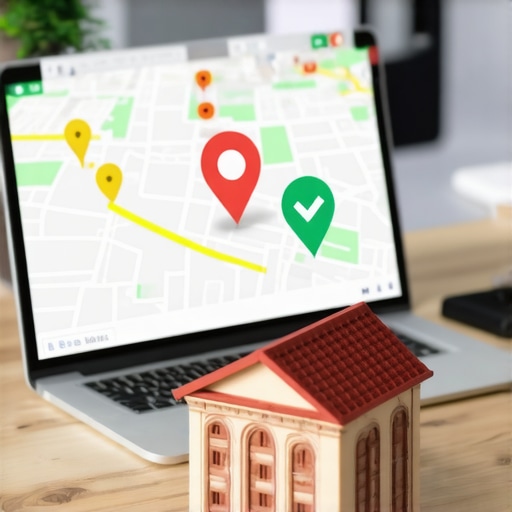
The Appeal Process Fixing a Wrongfully Banned GMB Listing
I spent three months fighting a hard suspension for a plumbing client whose listing was nuked simply because they shared a suite number with a defunct law firm. Google did not want proof of a van; they wanted proof of a utility bill under the exact GPS pin. This is the reality of the map pack today. It is a spatial database where your existence is a mathematical probability. I smell the ozone of a server room every time I open a suspension ticket. I see the glitches in the storefront data that the algorithms miss. A business is not a name; it is a proximity beacon. When that beacon goes dark, your revenue stops. The flow of leads is cut off like a severed main. You are left staring at a ‘Suspended’ badge while competitors with fake addresses thrive in the 3-pack. It makes me sick. I have spent decades investigating map spam. I know how the reviewers think. They are overworked. They look for any reason to click ‘Decline’. You have to make it impossible for them to say no. You have to provide forensic proof of your physical reality.
The forensics of a profile reinstatement
Fixing a wrongfully banned Google Business Profile requires a systematic audit of your NAP consistency, utility bill verification, and GPS pin alignment. You must provide original signage photos and official business registration documents to the Google support team to prove your physical presence and legitimate operation within your service area. Most owners panic. They submit an appeal without evidence. This is a fatal mistake. You get one shot at the first impression. If you fail, you enter the verification loop. I have seen businesses wait months because they forgot a suite number on a gas bill. The algorithm is binary. It does not care about your ‘intent’. It cares about the match. If you are reinstating a suspended profile when support keeps giving you the runaround, you need a different strategy. You need to stop asking for help and start providing proof. I once had to send a video of a client turning the key in the lock of their front door. Google wants to see the threshold. They want to see the permanent signage. They want to see the tools of the trade. If you are a service area business, they want to see the van with the wrap. They want to see the registration in the glove box. Use the right way to appeal a GMB suspension and win by front-loading your evidence. Do not wait for them to ask. Give them the folder. Give them the truth.
“Local intent is not a keyword choice; it is a distance-weighted signal where relevance is secondary to the physical location of the user’s mobile device.” – Map Search Fundamental
The ghost in the GPS coordinates
GPS coordinate salience is the microscopic math that determines if your business is verified at a specific pin. Google uses WiFi SSID triangulation and Bluetooth beacon signals to verify that users are actually visiting your shop. If your NAP data is inconsistent across local citations, the trust score of your GPS location drops. The pin moved. It happens when you edit your profile. It happens when a competitor suggests an edit. Every edit is a risk. You might think changing a phone number is simple. To Google, it is a change in the beacon signal. If you find that why your maps rank fluctuates every time you edit your profile is your main concern, you are likely triggering a re-verification check. The algorithm is checking your proximity weight against the new data. I have watched top-ranked roofers vanish because they changed a suite letter from A to B. The system saw a new entity. It saw a conflict. You must how to update your business info across the web without errors before you touch the dashboard. Clean the web first. The map is a reflection of the web. If the reflection is blurry, Google deletes it. They prefer a blank space to a lying pin. Accuracy is the only currency here. If you are struggling with a recovering your listing after a fake address suspension flag, you have to prove you are not a ghost. You need to show the lease. You need to show the mailbox. You need to show the life in the building.
The local authority reading list
- How to prove your physical location for a persistent suspension
- A step by step guide to lifting a manual GMB penalty
- How to rebuild map visibility after a permanent suspension
- The manual fix for GMB profiles stuck in the verification loop
Why your physical address is a liability
Hiding your business address can trigger an immediate ranking drop or suspension if the verification signals do not align with your service area polygon. While many home-based businesses fear privacy issues, Google Business Profile requires a physical anchor to establish local trust and Map Pack positioning. If you hide the address, you lose the centroid advantage. You become a floating entity. For many, how to hide your business address without losing search impressions is the ultimate goal. But it is a tightrope walk. You are essentially telling Google to trust you without seeing you. This is why Service Area Businesses (SABs) have a harder time ranking than brick-and-mortar shops. The algorithm favors the physical pin. It favors the store that people can walk into. If you are an SAB, your local justifications come from reviews and website content. If your why your map position dropped after you hid your office address research leads you to believe it was just a glitch, think again. It was a re-weighting of the proximity signal. You moved from a point to a shape. Shapes have less density than points. To combat this, you need a toolkit to increase local leads from google maps that focuses on entity signals rather than just proximity. You need to be mentioned in local news. You need links from local organizations. You need to be a part of the city’s digital fabric. If you are not in the fabric, you are just spam. And spam gets deleted.
The three mile radius that determines your revenue
Map Pack proximity is often restricted to a three mile radius for high-competition keywords like plumbers or locksmiths. To expand your local reach, you must optimize for behavioral signals such as driving directions requests and click-through rates from users outside your immediate centroid. Distance is the one thing you cannot optimize with keywords. You cannot rank in a city 20 miles away just by typing the name on your footer. The algorithm sees the GPS coordinates of the searcher. If they are too far from your pin, you do not exist. This is the proximity filter. It was toughened in the Vicinity update. Now, more than ever, how we fixed a proximity penalty caused by too many location pages is a common discussion. Agencies used to build hundreds of ‘city pages’ to trick the system. Now, those pages are liabilities. They are doorway pages. Google hates them. They want one real location with deep authority. If you use tools that track your exact map rank across different zip codes, you will see the ‘heat map’ of your visibility. It is usually a small circle. To grow that circle, you need real customer interactions in those neighboring areas. You need photos taken by customers in those zip codes. You need reviews that mention those town names. This is spatial authority. It is earned, not bought. If you try to buy it with why buying gmb ranking software often leads to permanent bans, you will lose everything. The software uses proxy IPs. Google knows. They have the most advanced bot detection on earth. You are playing against the house. The house always wins. Play the long game. Build a real brand. Fix your the 10-minute technical check for map pack visibility and stay consistent. The leads will follow the trust. The trust follows the truth.